When people ask what creates great style, they often expect an answer about trends or expensive labels. The truth is much simpler. Great style begins with understanding how clothes fit and how to create balance.
Fit and balance are the foundation of every look, no matter your taste, age, or body type. When those two elements come together, everything else falls into place. You can wear bold patterns, muted tones, structured pieces, or soft fabrics, but if the proportions are right and the fit feels intentional, the outfit will always look complete.
This concept is at the center of how I approach styling at Tyler’s Styling Studio. Every body is unique, and style works best when it complements that uniqueness rather than hiding it.
Why Fit Comes First
Fit is the difference between wearing clothes and feeling at home in them. When something fits properly, it moves with you instead of against you. The fabric rests where it should, the lines of the piece follow your natural shape, and you feel comfortable and confident.
Most people know when something does not fit, but they are not always sure why. The shoulders might be too wide, the sleeves too long, or the hemline slightly off. Sometimes the issue is not obvious until you see yourself in a mirror or photo. That small misalignment can change how you carry yourself throughout the day.
A well-fitting piece of clothing highlights your best features. It frames your proportions and gives structure to your silhouette. When the fit is wrong, even beautiful clothing can look unfinished.
Good fit is not about perfection or body size. It is about finding clothes that align with your shape and how you like to move through the world. Someone who loves flowy pieces should focus on drape and movement. Someone who prefers structure should pay attention to seams, waist placement, and tailoring.
The Role of Tailoring
Tailoring can completely change how an outfit feels. It is often the missing step that transforms good pieces into favorite ones. Even small adjustments, like shortening a hem or taking in a waist, can make a world of difference.
When I work with clients, I always encourage them to think of tailoring as part of the process, not an afterthought. Most clothing is made for general sizing, which means very few pieces will fit perfectly right off the rack. A tailor’s job is to make the piece fit you — your shoulders, your proportions, your shape.
If you have never taken something to be tailored, start with a simple piece you already love. Have it adjusted to fit exactly right, and notice how much more confident you feel wearing it. Once you experience that, you will never go back to off-the-rack guessing.
Finding Balance in an Outfit
Once the fit is right, the next key to great style is balance. Balance creates visual harmony. It determines how the eye moves across your outfit and how each element supports the others.
Think of balance as the rhythm of your wardrobe. Every piece plays a role in the overall composition. When the proportions work together, the result feels natural and effortless.
Balance can come from several elements:
- Proportion: how volume, length, and shape interact.
- Color: how tones relate and complement each other.
- Texture: how materials play off one another.
- Focus: where the eye is drawn first.
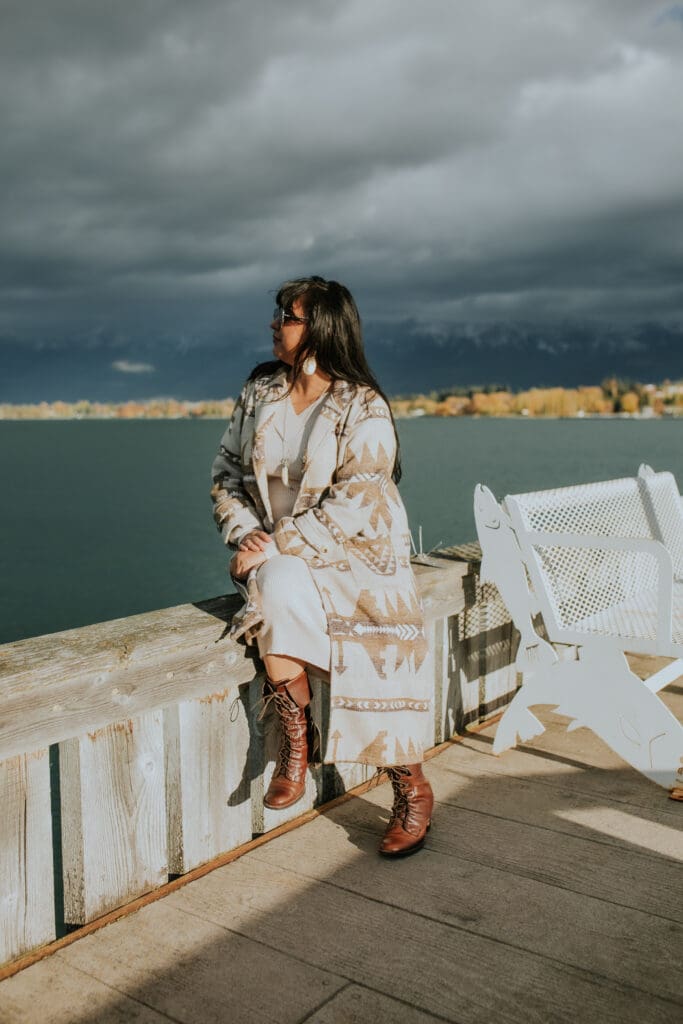
A common way to think about balance is through proportion. If you are wearing a fitted top, a relaxed or wider pant can create an easy equilibrium. If you have a full, flowy skirt, a more structured top brings definition. These combinations create a pleasing silhouette that feels complete rather than heavy in one area.
Color also affects balance. Strong colors draw the eye, while neutrals ground an outfit. If you are wearing something bold, grounding it with softer tones helps maintain harmony. The same principle applies to prints and textures. Mixing elements works best when one takes the lead and the others play a supporting role.
How Balance Affects Confidence
When an outfit feels balanced, your body responds. You stand straighter, you move more freely, and you stop thinking about how your clothes look because you already know they work. That mental ease is one of the quietest yet strongest forms of confidence.
Style confidence has less to do with how “fashionable” an outfit appears and more to do with how aligned it feels. If your outfit matches your personality, energy, and shape, people notice. They may not know why it looks right, but they sense the harmony.
When clients tell me they struggle with confidence, I often start by helping them simplify. Instead of focusing on what is missing, we identify what already works and build from there. Often, confidence grows when you remove distraction — clothes that do not fit, shoes that hurt, or styles that do not feel natural.
Balance brings clarity. You see yourself more accurately when the outside finally reflects the inside.
Understanding Body Proportion
Body proportion is one of the most practical tools in personal styling. It helps you make sense of how clothing interacts with your natural shape. Everyone has unique proportions, and understanding them allows you to choose pieces that feel cohesive and comfortable.
A few general principles help guide this process:
- Length matters. The point where clothing starts or stops can change the entire effect. A cropped jacket can highlight your waist, while a longer one can elongate your frame.
- Scale your accessories. Large jewelry or handbags create visual weight. If you are wearing soft fabrics, structured accessories can add balance.
- Mind the middle. Belts, waistbands, and high-rise cuts can define your silhouette and create proportion where you want it most.
The goal is not to change your body or hide features. It is to understand your natural proportions so you can choose what enhances them.
Color, Texture, and Movement
Style lives in the details. Once fit and proportion are in place, the final layer is expression — color, texture, and movement. These are what turn a well-fitting outfit into a reflection of your personality.
Color can shift mood instantly. Earth tones create warmth, bright hues create energy, and monochromatic outfits give sophistication. When you understand your undertones, you can select colors that make your skin glow and your eyes stand out.
Texture adds interest and dimension. A silk blouse next to a wool skirt or a leather bag with a linen dress tells a richer story than any single material can on its own.
Movement brings life. Clothes that move naturally with you feel authentic. That is why balance and fit matter so much; they let movement become part of your expression rather than something that feels forced.
How to Develop an Eye for Fit and Balance
You can train yourself to notice fit and balance the same way you learn any other skill. Start by observing. The next time you get dressed, look at where the fabric rests, how the lines fall, and how the outfit feels when you move.
Ask yourself a few questions:
- Do the clothes feel like they belong on me?
- Is there a part of the outfit that feels too heavy or too loose?
- Where does my eye go first when I look in the mirror?
Small adjustments make big differences. Try tucking or untucking a shirt, cuffing sleeves, adding a belt, or changing shoes. These experiments teach you what proportions make you feel the most comfortable.
You can also learn by paying attention to others. Notice what draws your eye in photos or on the street. It might be the balance between structure and flow, or the way color connects the outfit. Observation builds intuition.
The Emotional Side of Fit
Fit is practical, but it is also emotional. Wearing something that fits well can change how you move through a room. It shifts how you see yourself and how others see you.
When clients step into an outfit that fits properly for the first time, they often exhale. It is a small, physical sign of relief. They no longer have to adjust or hide. That comfort allows them to focus on what really matters — feeling present and confident.
Finding that level of ease takes patience. It is about trial, reflection, and building trust in your own eye. You start to notice when something feels off and when something feels right. That awareness becomes part of your confidence.
Style as a Personal Practice
Great style is not a destination. It is a practice that evolves as you do. Your body, lifestyle, and preferences change, and your wardrobe should grow with you.
Every season or milestone is an opportunity to reassess what fits your life. Some pieces will stay, others will leave, and that process is healthy. Letting go of what no longer fits is a quiet form of self-respect.
When you invest in understanding fit and balance, you give yourself freedom. You can walk into a store, try something on, and know immediately if it belongs in your life. That kind of clarity saves time, money, and energy.
Clothes should never be a source of frustration. They should support you. When they fit well and reflect your sense of balance, you move through your day with more confidence and calm.
A Final Thought
Fit and balance are the foundation of every great look. When those two elements are in harmony, everything else becomes easier. Trends will come and go, but the knowledge of what works for you stays with you.
Learning to see your shape, your movement, and your proportions as strengths is one of the best investments you can make in yourself. Once you understand how to bring balance to your wardrobe, you also bring it into how you carry yourself.
✨ If you are ready to learn more about how to create balance in your style, I would love to guide you through a personal styling consultation.
Let’s create your signature look
Ready to discover your style?
Whether you need a fresh wardrobe, a confidence boost, or a complete style reset, I’ll help you find looks that reflect who you are and how you want to feel. Let’s start building a style that’s 100% you.
Leave a Reply